All Activity
- Past hour
-
Make sure there is no damage if the lug nuts are loose enough to make a noise. To ensure that the wheel holes have not been chewed up or ovalled, remove each wheel that is affected and inspect all of the studs.
-
Oh great, it seems like the dealer forgot to torque the rear wheel lug nuts to specification when they were changing the oil and rotating the tires on my car. How frustrating!
-
Just the other week, I had a little twig (or branch, slightly bigger) stuck in my back wheel. Sounds pretty much the same to me. I managed to extract it by squeezing my palm narrowly between the spokes. While you're driving, a little branch inside your wheel or spoke could break off, leaving the remainder stuck behind. If I hadn't been on the lookout for it, I probably wouldn't have noticed it right away. I would look under your vehicle from the side opposite the source of the noise or, if you think it's related to speed, inside the wheels to see if there's anything there. It could be anything else, but that's a good place to start. Also, make sure the tyre isn't being scraped by any loose trim pieces (or ones that don't have a push-pin).
-
Adapts its speed to that of the car? Everything from the wheels and axles to the brakes, differential, driveshaft and gearbox is part of the drivetrain. I would highly recommend towing. In the event that an issue arises, the dealer will not be able to blame you for driving recklessly or making matters worse. (I wouldn't take the chance that they may, but it doesn't mean they definitely would.) It may be something as insignificant as an object caught in a moving component. A steel cable got stuck on my wife's driveshaft years ago when she was passing over something. Out of nowhere, "thump thump, thump"—exactly as you said. I don't know what the odds of that happening again are, but here's hoping it's something nearly that easy for you.
-
Apologies if this has been covered but I didn't see my exact scenario. Suddenly, a big thud shook me. It sounds like it is coming from the rear/center of the vehicle but cannot be sure. Like a train starting up, it goes faster and slower as the vehicle does. My first instinct was that one of my tires had gone flat, but upon closer inspection, I saw no damage, leaks or loose components beneath the wheels, and the tire pressure was within normal range. Even if I'm only a short drive from the dealership, wouldn't it be best to have it hauled in this case? Does that suit any of the known, prevalent drive train problems?
- Yesterday
-

Need Help Verifying the Name of the Initial Paint Colour
xsports replied to VVC-Geeza's topic in General Car Chat
https://madpaints.co.uk/ -
Need Help Verifying the Name of the Initial Paint Colour
xsports replied to VVC-Geeza's topic in General Car Chat
The intended appearance and where to buy the paint are shown below. But if that doesn't work, there are many of excellent sites like www.madpaints.co.uk that just require your registration. -
Need Help Verifying the Name of the Initial Paint Colour
xsports replied to VVC-Geeza's topic in General Car Chat
You can find your build sticker in the spare tyre well. -

Need Help Verifying the Name of the Initial Paint Colour
Ken_Lion replied to VVC-Geeza's topic in General Car Chat
Except in the case of a one-of-a-kind custom project, you'd think a real Audi dealer would know. -

Need Help Verifying the Name of the Initial Paint Colour
stevenkeyte replied to VVC-Geeza's topic in General Car Chat
https://smartcarcheck.uk/car-specs -
Need Help Verifying the Name of the Initial Paint Colour
stevenkeyte replied to VVC-Geeza's topic in General Car Chat
I found mine under the carpet in the trunk, so be sure to look in the spare tire well as well. A website named https://smartcarcheck.uk/car-check was actually something I found by accident. If you try your reg, it can bring up your specification details when I was exploring forums for my own code. Otherwise, entering your VIN into the parts system of a major dealer should yield the most accurate results. Which year and model is it? -

Need Help Verifying the Name of the Initial Paint Colour
neilrr010 replied to VVC-Geeza's topic in General Car Chat
The paint code, rather than the name, is the better choice. To find out which license plate bears the code, consult the manual. -
 Although it may not seem important, I am finding it more difficult than I anticipated to determine the precise name of the paint colour of my vehicle. The body shop wanted to know the exact name of the color—not just blue or gray—so they could touch up a few scratches. The colour appears to shift in response to changes in lighting, adding to the already perplexing situation. No paperwork pertaining to the car's paint job was included when I purchased it used. There doesn't seem to be anything that would explain it when I look under the hood and around the door frames. The last thing I need is to order the wrong paint and ruin the look. Please share your experience if you have ever had to locate the paint code for a used car.
 -
😁
-
MyCarsoft is capable of handling that.
-
The air intake and intercooler pipes should be inspected for any signs of leaks. If the MAF isn't the problem, any pipe following it could be. That will prevent it from regenerating and will be the cause of the buildup. In an ideal world, following the manual clean, you would have diagnostic tools that could reset the soot accumulation.
-
When you're heated, you might undo and use a lot of Plusgas. It is my preference to remove the temperature sensor and utilise that port.
-
Thanks for getting back to me. I'm going to use my handyman skills to fix it myself. I plan to inject foaming dpf cleaner into the thicker pipe that is attached to the dpf diff pressure sensor above the turbo assembly. I watched some videos from O Riley Autos and he does a lot of dpf cleans on the go and usually doesn't need to force regen because the cleaner does the job. I'll keep you posted once I finish. Cheers!
-
Would you like to hire a mobile DPF guy to come to your house or place of business, or do you intend to perform it yourself? Even though I don't know how much they cost, I have seen several of them on YouTube. I am genuinely interested in knowing how often DIY projects succeed compared to those that are handled by professionals.
-
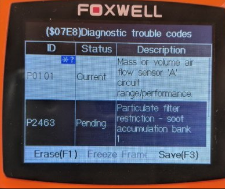
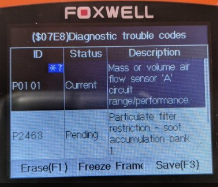
It appears to require a regen due to the impending DPF issue. Does the regen have any restrictions? There may be an issue with the MAF, but it could be caused by something else. I'm not an expert, but maybe if you probed more, you could find out. I figured Foxwell would be a good diagnostic tool, but I haven't really utilised it.
-

-
-
The EML light turned on, and the two codes that showed up were DPF and MAF sensor. I was wondering if anyone has any experience with cleaning the DPF on a 2014 Vito 113 diesel and could give me some pointers. Thank you!
- Last week
-
According to what I've read, when compared to other automakers, Mazda has one of the best implementations of cylinder-deactivation systems, particularly the more recent and improved versions. Among the many complaints about cylinder-deactivation that I've seen posted on Mazda owner forums recently is the fact that switching modes can sometimes cause certain drivers to feel a harsh or uncomfortable sensation. Still others insist it works like a charm (for them, at least right now). Because Mazda and other automakers didn't adequately reinforce some engine components to endure the additional chronic stress, earlier versions of cylinder deactivation have more documented problems and serious issues associated with it. The stress and wear on an engine and its components caused by stop/start and cylinder deactivation are higher compared to an identical engine without these "features," even with identical treatment and maintenance. Its statistical life expectancy will be lower unless the manufacturer has adequately invested in and reinforced the several components that would be subjected to greater stress, as this is the natural consequence of the laws of physics. The same holds true for turbo engines as well. To alleviate some of the possible longevity issues, you should be more proactive (lower interval) with oil change services (& use the best quality oil) to make sure the oil is always functioning at its best and never shears out of grade. However, with the right care and attention to detail, even engines and components that are more complex and under more stress can still manage 200,000 miles or more—barring flaws in the materials or design or manufacturing process. For starters, I'd rather not have any of those "features" in my car, therefore I stay away from them. Maintaining simplicity and straightness reduces unpredictability. Modern aggressive cost-cutting tactics employed by automakers and increased complexity (sometimes for stupid or needless reasons) are enemies of longer-term reliability. However, in most cases, these bad modifications for end users have been imposed on us by intrusive government laws, leading to less dependable and generally more difficult and complicated automobiles, particularly after the warranty has expired.
-
It is comforting to hear that. Thank you.