All Activity
- Past hour
-
Several years ago, a relative of mine acquired a Mercedes E220 for himself. The vehicle, around five years old, was rather impressive; his typical preferences are the Honda Accord or Nissan Primera. This was his first prestigious German automobile, and he was understandably excited. He guided me on a tour and took me on a drive. What emerged from his mouth astonished me. He informs me that this Mercedes requires servicing every two years or after 18,000 kilometres, indicating low operating costs. He typically drives approximately 5,000 miles, resulting in no funds available for two years. He informed me that this car will entail lower service costs compared to his last Honda Accord. He was willing to maintain the Mercedes less regularly than the Honda, which he would service for every MOT, despite having spent a considerable amount on the car. I attempted to suggest that he disregard the service indicator and invest some funds in car maintenance; nevertheless, he was unyielding, since the computer dictated otherwise. Three decades ago, driving a BMW or Mercedes was regarded as a symbol of prestige, particularly when the streets were predominantly populated by Ford Sierras and Vauxhall Cavaliers. Prior to the Mondeo and Vectra. One required substantial financial resources (in my region, akin to a drug king or pimp) to operate a BMW or Mercedes. They have now extended the program to include three years of complimentary access. Over a span of three years, BMW may perform only one oil change, resulting in minimal costs for them. A recent acquisition of a BMW now appears comparably priced to a Mondeo and Vectra. Jeremy Clarkson of Top Gear stated that BMWs will be more prevalent on the streets than Mondeos.
-
The service intervals were determined by marketing initiatives rather than engineering considerations. They determined that servicing might be extended to approximately 15-18k without incurring significant claims on the 100k warranty. In actuality, even contemporary and entirely synthetic oils deteriorate. The pivotal threshold for the majority of engine oils occurs at approximately 6,000 miles or more. By 12,000, they are all essentially exhausted. I cannot remember the source of the study links (perhaps Bob is the oil expert), but there has been an investigation of used engine oils indicating that a significant reduction was observed at the 6,000-mile mark.
-
10,000 miles or 12 months The rationale for extending the intervals is to enhance their attractiveness to leasing businesses. I have observed numerous BMW diesel vehicles operating under the CBS system, all of which exhibit sludge accumulation. The oil maintains significant carbon when subjected to CBS, which substantially contributes to premature chain failures and the spinning of bottom end bearings, resulting in extensive and costly damage. Considering the cost of oil and filter changes, performing them every 10,000 miles or annually is an obvious choice for me.
-
Discrepancies appear to exist between the book and actual practices. The official BMW distances or times are unexpectedly lengthy; may this indicate contemporary advancements in manufacturing tolerances, resulting in reduced smoothing of cylinder bores by piston rings, for instance? The machinery that manufacture engines are markedly distinct from those of the past. BMW is not unique; our Golf has endured 7 to 8 years of a comparable maintenance regimen without visits. Should I subject my BMW to the same evaluation? I am quite interested in understanding what members consider to be the acceptable interval or distance to utilise, and whether regular long versus short travels should be taken into account.
-
Could someone assist in transporting my van to a diesel specialist? It is experiencing a power deficiency and emitting black smoke from the exhaust. When I start the van, do you experience a delay of 10 to 20 seconds until it operates normally? Clarify this for them.They inspected the system and reported that the throttle valve is immobilised in the closed position, resulting in choking. He stated that it is an expensive electrical malfunction. He advised disconnecting the throttle valve and remapping it, which I did at a cost of £240 plus labour, totalling £450. However, the vehicle continues to emit smoke and exhibits a delay of approximately two seconds in power reduction upon releasing the accelerator. I cannot afford to incur further expenses when they assured me it was functioning properly. This is the second occurrence; nevertheless, it seemed as though no repairs had been made, as the same issues persisted. He called me and enquired if I had disconnected anything. Refused to drive it home and departed. He stated that he cannot comprehend it; someone must reconnect the valve. Could you please provide advice? Thank you. Will this interfere with the admissions process?
-
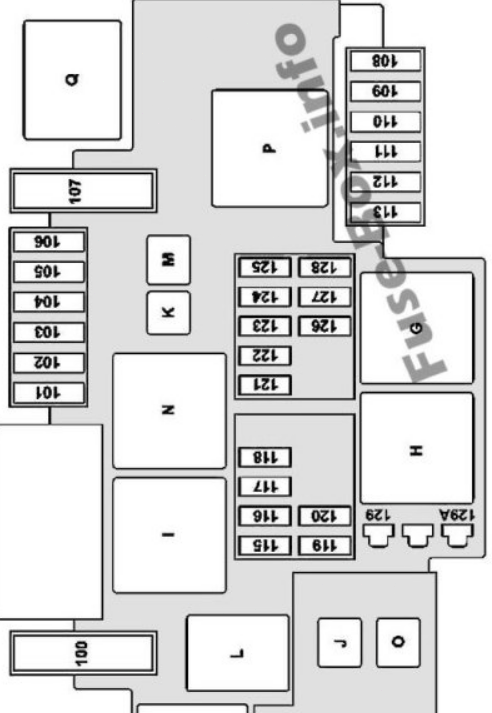
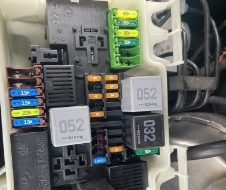
The light grey relay is located adjacent to the blue fuses. I indicated that the fuse box diagram is orientated for a left-hand drive vehicle.
-
What symptoms are you experiencing?
-

-
Orienting AMGeed's diagram enhances clarity: Relay N in your fusebox is the light grey component on the left in your image.
-
-
Greetings, I apologise for the interruption once more. I accessed the fuses in the driver's side engine compartment; but, the fuse schematic you provided does not correspond with the diagram I own. Could you identify relay N in the attached photograph? Thank you once more, my friend.
-
https://mercservicing.co.uk/
-
To my knowledge, substituting the relay is a straightforward exchange. No programming necessary. It may be necessary to erase the codes using your reader, thereafter restart the vehicle after replacing the relay, and anticipate that this resolves the problem. If issues persist after replacing the relay, contact Terry Gates in Harrow. A highly regarded Mercedes specialist.
-
I greatly appreciate it. Briefly, will replacing this fuse resolve the issue? 1. Eliminate the fault codes I own. 2. Upon replacement, must I reprogram it, or is it merely a straightforward exchange assuming I obtain the correct part for my vehicle? Thank you
-
https://fuse-box.info/mercedes-benz/mercedes-benz-c-class-w205-2015-2019-fuses-and-relay
-
Navigate to the Fuse Box located in the engine compartment, where Relay circuit 87 is designated as "N" in the provided link. Note that the diagram pertains to a left-hand drive vehicle, hence all components are mirrored, including the fuse box located on the driver's side. I would begin by substituting the relay, erasing the codes, and then observing if the error reoccurs.
- Today
-
Greetings, everyone. My Topdon scanner displays the codes U208487, P069500, and P065800. I am uncertain whether they are connected, as it states 'the output for relay circuit 87' and 'communication with radiator shutter 1 has a problem.' Is the radiator shutter issue attributable to this relay, and if so, where is relay 87 situated? My vehicle is a 2016 manual Mercedes C200d with a 1.6-liter diesel engine. If anyone had information or experience about this matter, your assistance would be greatly appreciated. Thank you very much.
- Last week
-

w639 suspected faulty engine to chassis ground connection
KOOLCAR replied to KOOLCAR's topic in General Car Chat
resolved The problem was a faulty engine ground. I utilised some welding ground cable and established grounding at several spots, and now everything is functioning properly. -
w639 suspected faulty engine to chassis ground connection
KOOLCAR replied to KOOLCAR's topic in General Car Chat
All terminals and wires appear to be in satisfactory condition; I will utilise a voltmeter tomorrow to ensure everything is functioning optimally. The only noteworthy observation is that when I connect a wire, touching one end to the earth and the other to the engine block, a little spark occurs. This suggests that I may need to reposition the earth strap. I fitted it by connecting it to the gearbox mount on the body side and then to the actual gearbox housing. -

w639 suspected faulty engine to chassis ground connection
rab60bit88 replied to KOOLCAR's topic in General Car Chat
Are the battery terminals and posts clean and secure, and are the wires in satisfactory condition? -
w639 suspected faulty engine to chassis ground connection
KOOLCAR replied to KOOLCAR's topic in General Car Chat
Initially, I suspected the battery; however, connecting the jump pack directly to the battery does not initiate the start. Conversely, attaching the jump pack to the engine bay positive terminal and the body ground facilitates ignition. I am currently reconditioning the batteries. -
w639 suspected faulty engine to chassis ground connection
rab60bit88 replied to KOOLCAR's topic in General Car Chat
I possess a 2007 W639 and have experienced an intermittent issue with starting when the engine is heated. It merely emitted a click, like to a depleted battery. However, if you kept the hood raised and attempted to start the engine every few minutes, it would gradually begin to turn over with the key, initially very slowly and for only a few revolutions, then increasingly faster and longer until it eventually began. The cold start was consistently satisfactory. The battery passed the test, however it was aged (the original from 2007); the earth strap and connections were satisfactory. The battery is located beneath the passenger seat, hence it was not subjected to heat soak from the engine impacting its performance. The initial concern was a 'lazy starter motor,' a common issue with certain brands, particularly BMW. However, I opted to replace the battery because (a) it was aged and (b) this solution was significantly more economical than purchasing a new beginning motor, which ultimately resolved the problem.dk: It has been satisfactory ever since. -
w639 suspected faulty engine to chassis ground connection
KOOLCAR replied to KOOLCAR's topic in General Car Chat
I left the original earth strap intact and installed a new earth strap from the bell housing to the body, anticipating that an increased number of connections would yield improved performance. -

w639 suspected faulty engine to chassis ground connection
Black_raven replied to KOOLCAR's topic in General Car Chat
Is it a foolish inquiry to ask if you removed the engine-body ground strap and cleaned the contact surfaces? -
w639 suspected faulty engine to chassis ground connection
KOOLCAR posted a topic in General Car Chat
I possess a 2008 W639 model. A week ago, I encountered a starting issue characterised by a clicking sound. I successfully jump-started the vehicle, suspecting a depleted or low battery. The vehicle was operational and utilised as a delivery van throughout the day. After a few hours, the cluster ceased functioning, and the battery ultimately failed. A technician arrived, inspected the battery after a jump start, and confirmed everything was satisfactory; however, he said, "The engine-to-body ground connection is inadequate." Successfully established a connection from the engine block to the earth point beneath the bonnet as a temporary solution, and all functioned properly. Yesterday, I installed a new earth strap from the gearbox to the body, intending to remedy the issue; but, it did not work. Commenced examination for other concerns and discovered that the original earth strap from the engine to the body was in satisfactory condition. The sole method to initiate the van's engine is by utilising a jump booster cable connecting the engine's positive terminal to the body’s earth point. I have inspected the battery negative, and it is functioning properly; also, all ground connections in the fuse box appear to be in good condition.